What Are the Early Warning Signs of a Stroke You Should Never Ignore?
Picture this you’re having a normal evening with your family, and suddenly your father’s speech starts sounding a little slurred. Do you brush it off as tiredness, or do you pay attention? That one decision can change everything. This is exactly why so many families in Ahmedabad now search for the Best Neurosurgeon in Ahmedabad the moment something feels “off” with a loved one because when it comes to strokes, every single minute counts.
A stroke happens when blood flow to a part of the brain gets blocked or suddenly stops. Think of it like a water pipe getting cloged the brain cells beyond that block start losing oxygen, and if this goes on too long, those cells get damaged. The good news? Most strokes give warning signals before they hit hard. You just need to know what to look for.
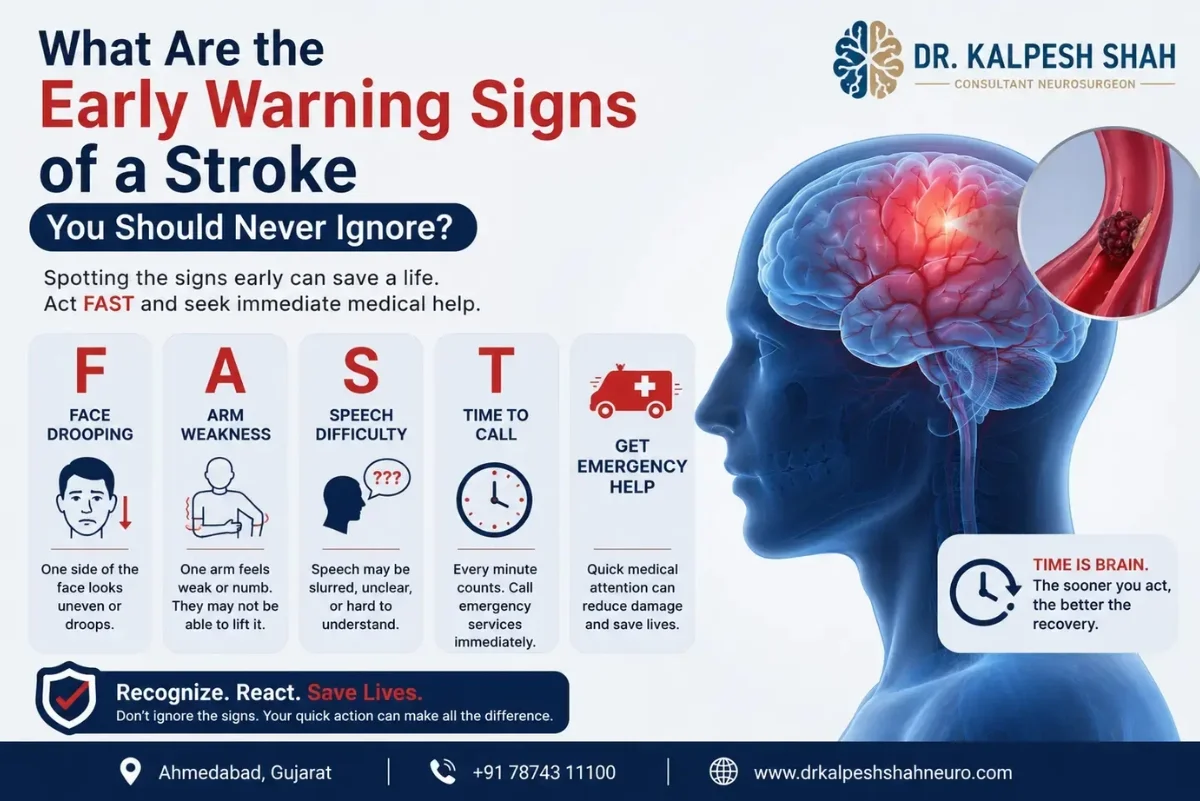
The Classic Signs Remember "FAST"
Doctors often use a simple word to help people remember stroke symptoms: FAST. It’s easy to recall, even in a panic.
- F – Face drooping: Ask the person to smile. Does one side of the face droop or feel numb?
- A – Arm weakness: Ask them to raise both arms. Does one arm drift downward or feel weak?
- S – Speech difficulty: Is their speech slurred, or do they struggle to repeat a simple sentence?
- T – Time to call for help: If you notice any of these signs, don’t wait. Every minute without treatment matters.
Other Warning Signs People Often Miss
Not every stroke announces itself through FAST symptoms alone. Some early signs are quieter and easily mistaken for something else entirely.
Sudden confusion is one of them a person might struggle to understand simple conversations or seem strangely disoriented. Sudden vision trouble is another; one or both eyes may blur or go dark without warning. Some people experience a sudden, severe headache with no clear cause, almost like nothing they’ve felt before. Loss of balance or coordination is common too the person may stumble, feel dizzy, or find it hard to walk straight, almost like they’ve had one too many drinks, even though they haven’t touched a drop.
These symptoms can feel random or minor in the moment. That’s exactly why they get ignored and that’s exactly why they shouldn’t be.
Why Acting Quickly Actually Matters
There’s a saying in stroke care: “time is brain.” It sounds dramatic, but it’s simply true. The longer brain cells go without blood supply, the more damage builds up. Getting to a hospital within the first couple of hours dramatically improves the chances of a full recovery.
According to Dr Kalpesh Patel, a neurosurgeon who has treated stroke cases for years in Ahmedabad, one of the biggest challenges isn’t medical it’s awareness. Families often wait, hoping the symptoms will pass on their own. That wait, he explains, is often what makes the difference between a good recovery and a lasting disability.
Who Should Be Extra Careful?
Certain people carry a higher risk and should stay a little more alert to these signs:
- People with high blood pressure or diabetes
- Those who smoke or have a family history of stroke
- Adults above 50, though strokes can happen at any age
- People with high cholesterol or heart-related conditions
None of this means you should live in fear. It simply means being aware, so you can act quickly if something feels wrong for yourself or someone you love.
What to Do If You Spot the Signs
If you notice any of these symptoms, even briefly, don’t wait to see if better call Call for emergency help immediately, keep the person calm and seated, note the time symptoms started (doctors will ask), and avoid giving them food, water, or medication until help arrives.
A brief episode that goes away on its own could still be a warning sometimes called a mini-stroke. It’s a signal your body is sending, not something to shrug off.
Being informed is often the simplest form of protection. Recognising these signs early, staying calm, and reaching out to the right specialists like consulting the Best Neurosurgeon in Ahmedabad without delay can genuinely make all the difference in the world for someone’s recovery.
